Voices of Select Green Hotels: Conversations with the people shaping sustainable hospitality.
On the lesser-known island of Sifnos, in the heart of the Cyclades, Stamna Sifnos offers a calm alternative to the busier Greek islands. When its two owners first arrived, they immediately fell in love with the vibe of the island and the invitation to truly connect with the local culture.
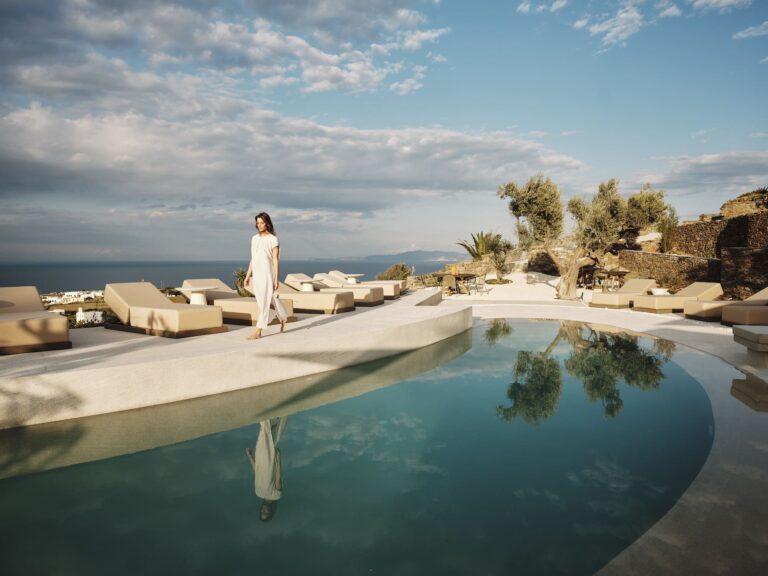
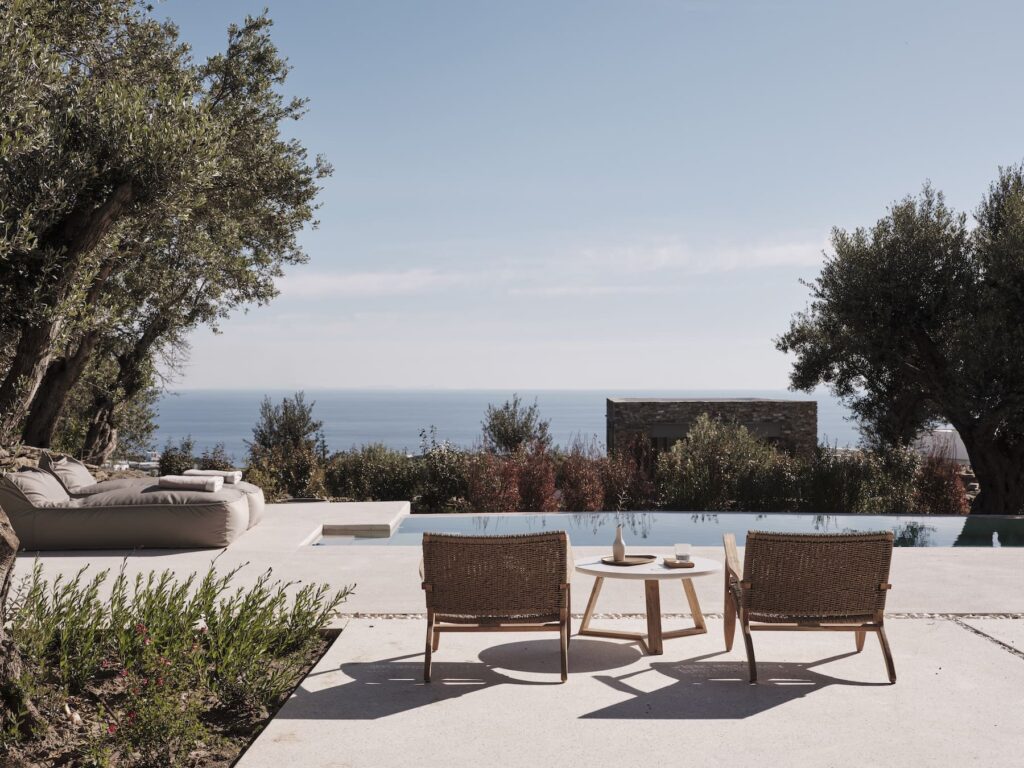
With open views across the Aegean Sea, each of the 20 rooms and suites at Stamna Sifnos was designed to have private outdoor seating and space to unwind in this destination, where the rhythm slows down.
“If we do something in hospitality, this may be the place.”
1. This is a family-owned hotel. What’s the story behind it? Is your family originally from Sifnos?
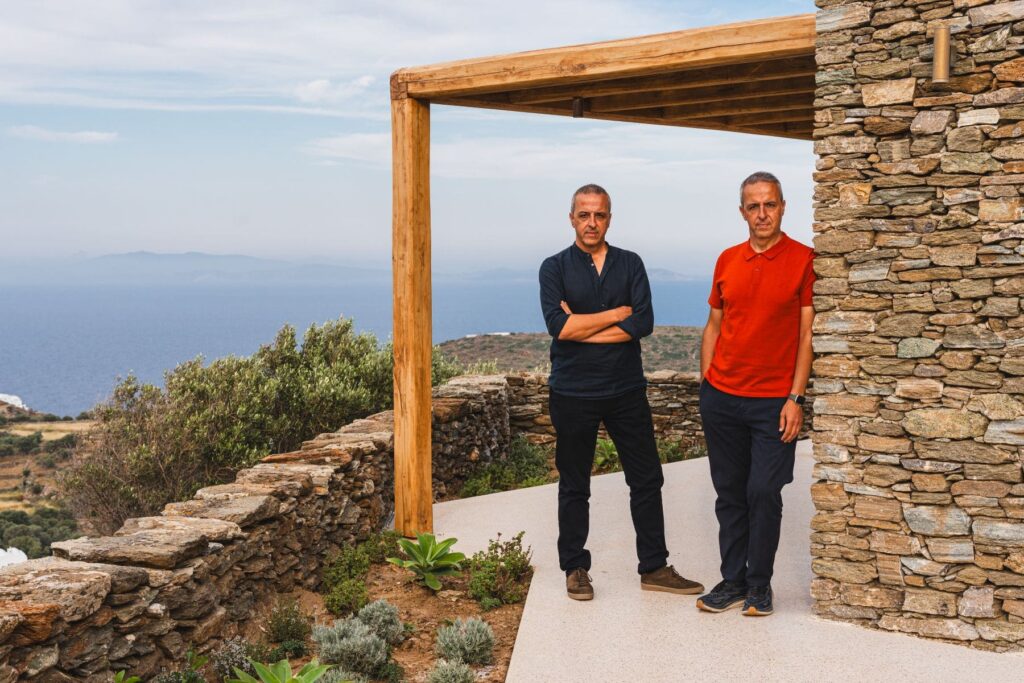
Costas: Niko and I are not from Sifnos. We were born in Belgium to a Greek family and spent time in Crete. In the last 30 years, we’ve spent our lives between Greece and Spain. We were working in different sectors in Spain, and every summer we would go with our families to Greece. One day, we arrived in Sifnos in 2011, and we liked it so much that we repeated it for four years in a row. Something caught us in terms of destination, this nice balance between authenticity and what we used to live when we were young, during the holidays. So, we kept visiting and finally said: “If we are dreaming of doing something in the future in terms of hospitality, this may be the place”. We started looking for a nice property with my brother. And in 2018, we bought a very beautiful plot of 13,000 square meters close to the main village, Apollonia.
2. In what ways does the hotel try to stay connected with the traditions and daily life of Sifnos?
Costas: The name of the hotel, Stamna, is already a tribute to the local pottery. Stamna, in Greek, means ceramic pot. Pilōs, which is the name of our restaurant, is also a Greek word meaning clay. The decoration within the hotel reminds a lot of earthy colors (pottery, ceramic, red, olive trees, green) of the island.
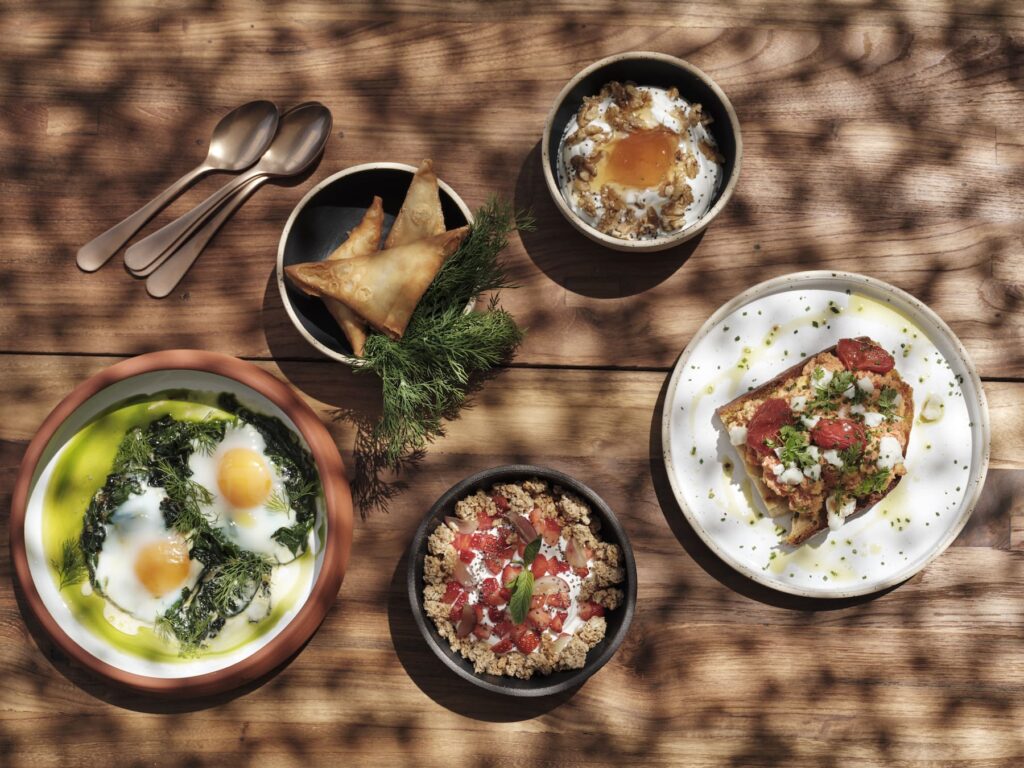
A second point of connection is gastronomy. We made a good collaboration with Gkikas Xenakis, who is our executive chef based in Athens, and we designed, together with him, a nice menu based on traditional local recipes (Greek or Cycladic). A lot of the ingredients that we use in our recipes are local. We also produce our olive oil from the olive trees on the property. We did that for the first time last year, and we offer it to our customers. Our wine list is totally Greek.
Also, we have a lot of materials that were taken from the same plot to make use of the property itself. All the stone walls are made with stones that we took from the property.
And of course, we try to hire as many local people as we can for our staff. We also collaborate a lot with local partners, either for the activities that people want to do (such as local cooking classes or pottery classes). At the same time, we also recommend many other local activities to our customers, to really be a place where our hotel acts as an ambassador for the island. Although we have a lot of things inside the hotel, we don’t want people to stay at the hotel all day long. We want to act as a platform for them to discover the island.
3. If a guest had only one full day here, how would you suggest they experience the place, the people, and the landscape?
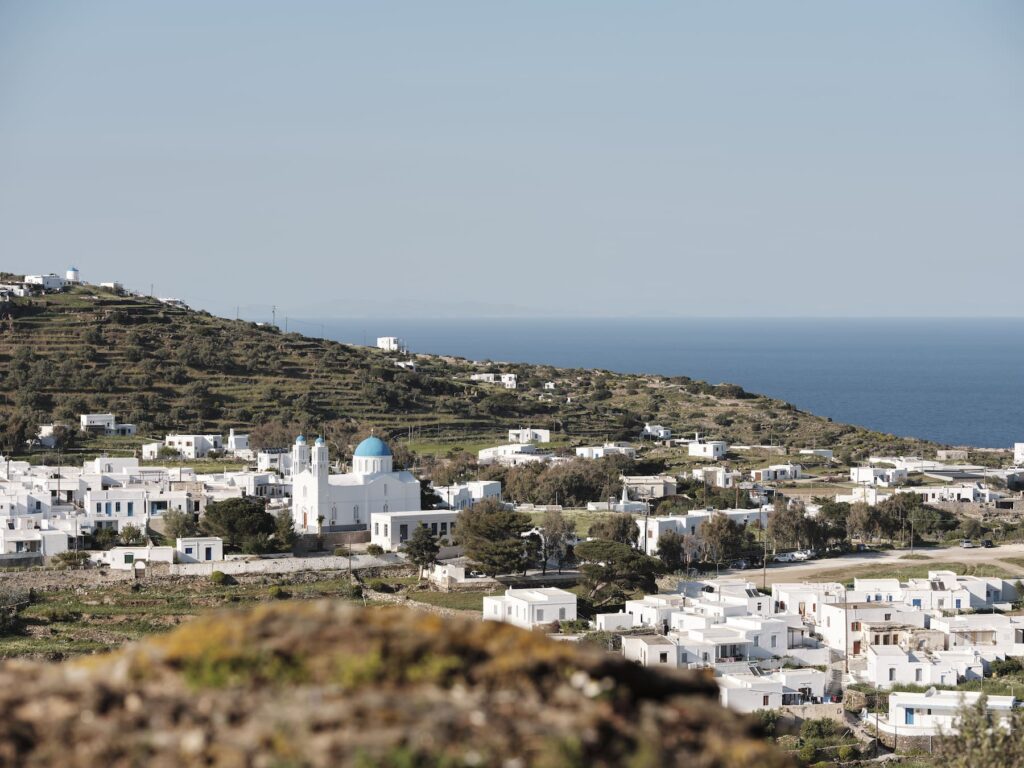
Costas: Settle at the hotel, have a quick look at where you are, and walk to the nearby capital, Apollonia, which is a good example of what the local villages are like. Then take a car to the southern part of the island and visit a couple of iconic beaches and have a swim there. Then go to another beach, to a nice taverna, to try something local. Then go to a couple of nearby ceramic places to see what local people do, and the different techniques and approaches, depending on the family. Buy or not buy some things as a souvenir. Maybe do or not do a pottery class, if time allows.
Then, in the afternoon, after a short rest, go to Kastro, a very beautiful medieval castle and the ancient capital of the island. Go to Loggia wine bar, with good wines and a very nice atmosphere. And then have dinner at a nice restaurant.
Like that, you get a good sense of nature, food, and a bit of swimming. You see pottery, and you also experience the local vibe of the villages, either at noon or at night.
4. What are some sustainability actions you have recently implemented, or are planning to implement?
We made a big investment in terms of energy efficiency. We have eight big water tanks to collect rainwater. We worked on the insulation of the buildings so as not to consume too much air conditioning. So even in a very hot summer, you would need only maybe 20 minutes or half an hour of AC. We also have solar panels.
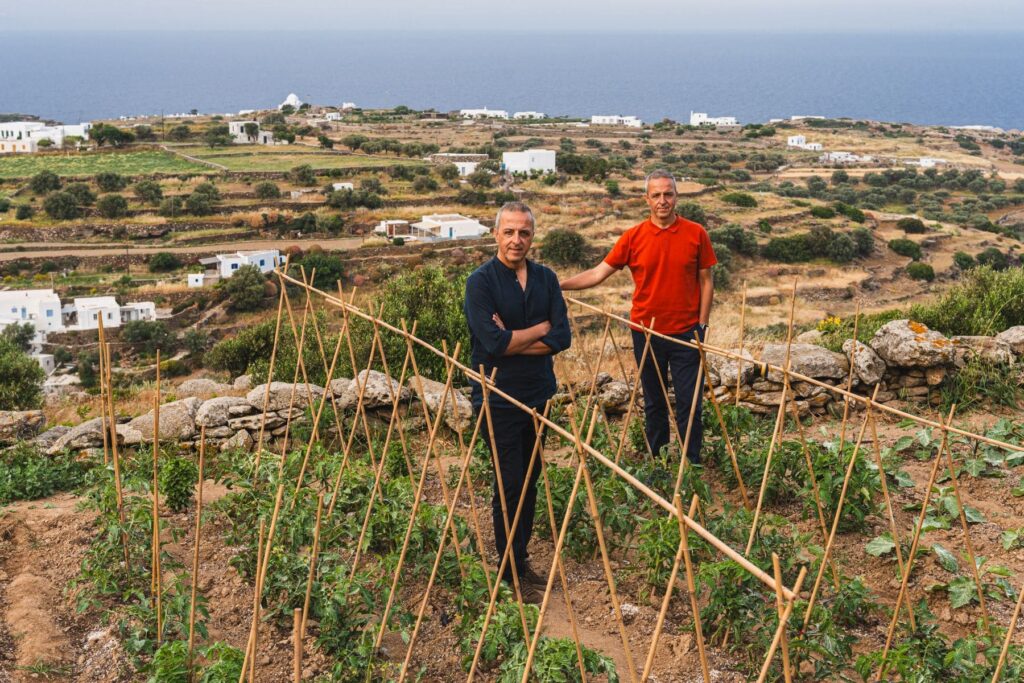
We have our own vegetable garden on the property, and we use it as much as possible in the restaurant. We could produce more on our premises, and we could have more trees, olives, and vegetable gardens on the property. We could also have more collaborations with local producers to be as autonomous as possible, in order not to import anything from other islands or from Athens. And we are exploring ways to extend these collaborations.
The uniforms of our staff are made from recycled items. We collaborate with a company that recycles hotel sheets and converts them into uniforms.
Nikos: If we focus on the “S” in ESG, we are hiring local employees. It’s not always possible, but when we can, it gives career opportunities to young people on the islands. Also, in the future, we would like to involve our staff, and probably also our clients, in social and environmental activities on the island—cleaning beaches, helping to prepare a festival… to engage with the local community. Now we are already sponsoring a local race that is organized at the beginning of the summer, but we could do more.
5. You offer farm visits in collaboration with local partners. Could you please tell us more?
Nikos: We collaborate with two farms. One of them has its own vegetable garden, and they organize cooking classes the old way, cooking in ceramic pots. Our guests go there, collect the products directly from the soil, learn how to cook them, and then sit down around the table and eat together. It takes the entire morning. It’s a great experience because they produce vegetables almost without water, and they have developed very special local techniques to irrigate, save, and conserve.
The other farm focuses on animals: goats, sheep, cows, rabbits, chickens, etc. Guests get a very good explanation from the owner about the history of the place and the traditions—the way they used to produce their own cheese and other goods locally. They also have the opportunity to milk the goats.
6. Looking ahead, what would you like to refine or protect most about Stamna Sifnos over the next few years?
Costas: We need to protect the home feeling that we have created. Our guests are used to very good service; at the same time, they really appreciate the informality. The balance between being very professional and also very approachable. We talk to our staff about this a lot, we train them, and in the end, they love the project themselves, as if it were theirs. And we must keep insisting, because that’s very important.
For example, we are not the typical hotel with a manager or an owner who comes from time to time to see what happens. We are very hands-on. We personally go to receive the customers at the port. We do that because we really feel that’s what hospitality is about. That’s how I would like to be received if I go somewhere. In 10 minutes, we drive them to the hotel, we give them a small introduction in the car, and then during their stay, we see them several times, and we advise them on what to do. We drive them back when they leave, and we have time to hear their direct feedback.
Nikos: Also, I think we shouldn’t lose our honesty. We would never recommend a restaurant or a place that we wouldn’t go to ourselves.
7. What kind of feeling or memory do you hope guests take with them when they leave Stamna?
Costas: We hope people leave with this personal touch. A nice conversation with a waiter in the morning, a nice recommendation for them to go and celebrate a special dinner. A professional place, honest, and purely local, Greek.
Stamna Sifnos – In Short
8. Your favorite spot in or around the hotel?
Nikos: One end of the property, where we have our vegetable garden. It has the best views, and it’s a very peaceful place.
Costas: Outside the hotel, I would go to Kastro, where the atmosphere is very special, and I would enjoy the sunset from there.
9. Your favorite dish at Pilōs Restaurant during the spring and summer, since you offer seasonal dishes.
Costas: The marinated fish, very fresh, with local spices. And the dolmadaki tartare. The dolmadaki is a dish that our mother used to make, but in a new version.
Nikos: Kagianas, scrambled eggs with fresh tomato, onion, and local cheese, manoura.
10. Your favorite hour of the day to spend at the pool, and why?
Costas: Sunrise, with the birds around, even before breakfast.
Nikos: Same for me!